
Tips for Managing Multiple Branches Efficiently: Scaling Success in Wellness Businesses
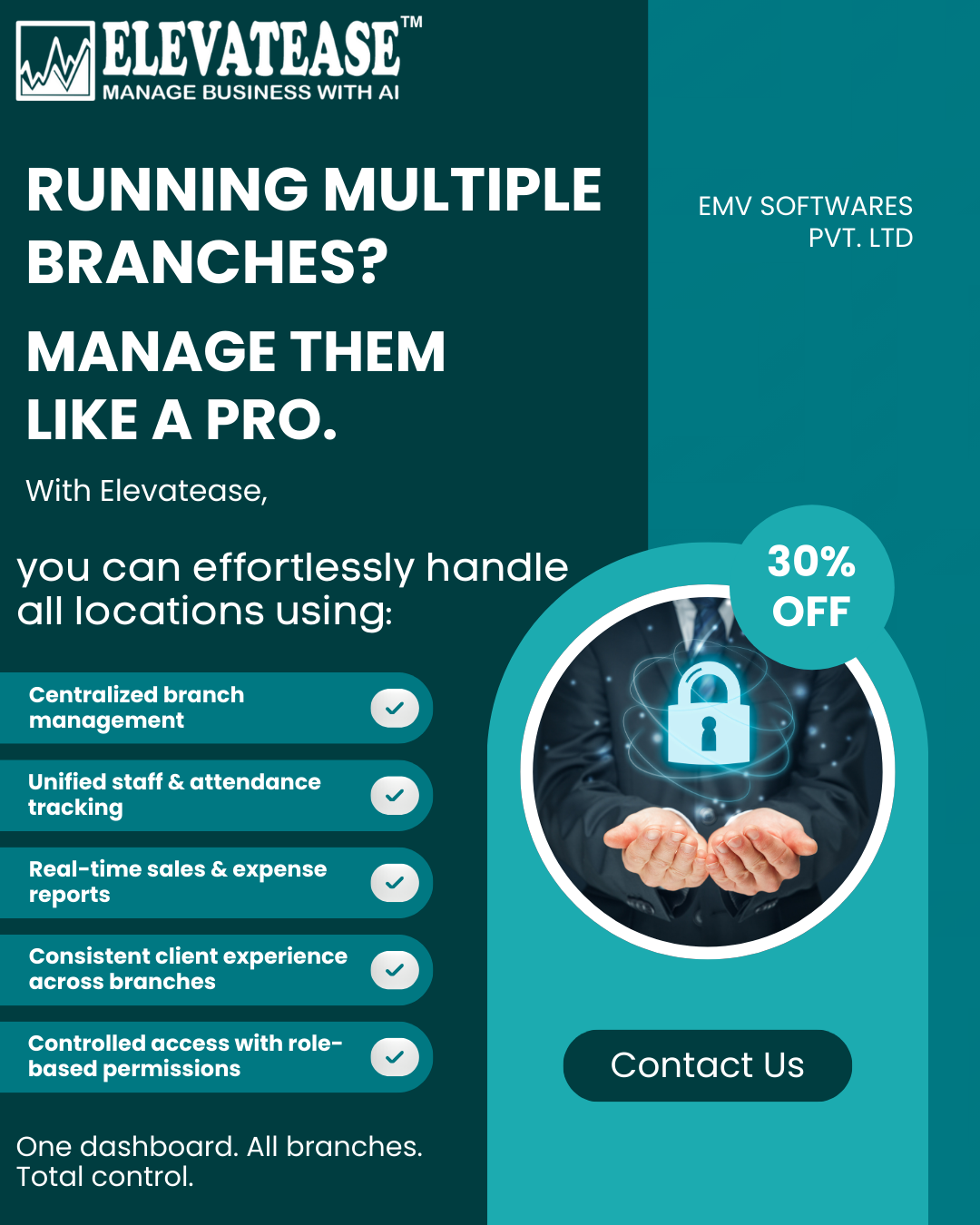
Expanding your successful salon, spa, or aesthetic clinic into multiple branches is an exciting milestone. It signals growth, brand recognition, and increased market share. However, with expansion comes complexity. What worked perfectly in a single location-manual scheduling, paper-based inventory, and localised decision-making-becomes a chaotic drain on resources when multiplied across two, three, or even more locations. The key to managing multiple branches efficiently is not to work harder at each location, but to centralise and automate the processes that tie them all together. This requires moving beyond fragmented local systems and embracing a single, cloud-based platform that acts as the command centre for your entire enterprise. We will explore five critical tips for achieving scalable, efficient, and profitable multi-branch management. 1. Implement a Single, Centralised Management System The biggest mistake multi-branch businesses make is allowing each location to operate on its own independent system, different POS here, a different calendar there. This creates data silos and makes accurate reporting impossible. The foundational tip for efficiency is adopting a single, unified, cloud-based software solution. Single Source of Truth: All data-client profiles, staff schedules, sales figures, and inventory levels must flow into one centralised database. This ensures consistency and prevents discrepancies between locations. Global Visibility: Owners and managers gain instant, global visibility into the performance of all branches from a single dashboard. You can compare the revenue, utilisation rates, and service popularity of your city centre location versus your suburban location in real-time. Standardised Operations: A centralised system forces standardisation of processes across all branches, ensuring that every client receives the same high level of service and that all billing procedures are identical, minimising errors. A unified system is critical for Increased Accuracy and for ensuring seamless service delivery regardless of the client’s chosen location. 2. Standardise Staff and Resource Allocation Across Locations Managing staff across multiple locations introduces challenges related to scheduling equity, cross-branch support, and commission calculation. Bottlenecks occur when managers spend excessive time manually coordinating schedules and calculating pay across different sites. Your software must treat all staff and all branches as part of one large resource pool: Centralised Staffing Calendar: Managers can view and manage staff schedules across all locations in one calendar. This allows for strategic Resource allocation, for instance, temporarily shifting a specialised aesthetician from a slower branch to a busy one during peak seasons. Attendance and Payroll Clarity: The system must use integrated Attendance Tracking and Salary Calculation that automatically applies different tax or commission rules based on the branch or service performed. This dramatically reduces the administrative burden on central HR. Role Assignments: Standardise Role Assignments across all locations. A "Senior Stylist" must mean the same qualifications and pricing tier everywhere, maintaining brand consistency and simplifying scheduling. This automation ensures Increased Efficiency by freeing up HR resources and guaranteeing fair, transparent payroll regardless of how many locations an employee works across. 3. Achieve Complete Financial and Inventory Control One of the fastest ways to lose money in a multi-branch setting is through inventory discrepancies and non-standardised pricing. If one branch is overstocked and another is running out, you lose sales and tie up capital unnecessarily. All financial and product data must be unified and managed centrally: Standardised Pricing: The software enforces standardised pricing for all services and retail products across every branch, preventing arbitrary pricing decisions that confuse clients and erode profit margins. Centralised Inventory Management: Even if stock is physically held in different places, the system manages all Inventory Management from a central point. Managers can track stock levels at each location, initiate branch-to-branch transfers, and generate consolidated purchase orders for better vendor negotiation. Consumption and Cost Management: The system tracks Consumption Management (how much product is used per service) across all locations, highlighting which branches are most efficient, which is a powerful driver of Cost Saving. Centralising these controls ensures every transaction and every unit of inventory is accounted for, eliminating one of the largest sources of multi-branch revenue loss. 4. Maintain a Unified Client Relationship Management (CRM) Client loyalty is built on recognition and seamless service. A major failure point for multi-branch businesses is forcing a client to create a new profile or recount their history when they visit a different location. Your CRM must be accessible and identical at every front desk: Universal Profile Access: Whether a client books at Branch A or Branch Z, their complete profile-past services, loyalty status, purchase history, and package balances-must be instantly accessible. The system automatically tracks their visit frequency at different branches. Centralised Package and Loyalty Programs: A client should be able to buy a six-session Package Management at one branch and redeem it seamlessly at any other. The Loyalty Program points they earn must be universally redeemable. Consistent Communication: All client communication-automated reminders, promotional emails, and follow-ups-should originate from the same system, ensuring a single, professional brand voice. This level of universal recognition ensures client satisfaction and strengthens the overall brand loyalty, maximising client lifetime value across the entire enterprise. 5. Leverage Data for Strategic, Scalable Growth When managing multiple branches, relying on gut feeling is dangerous. You need clear, data-driven insights to know where to invest, where to cut costs, and where to train staff. The unified system’s primary function should be to provide actionable, comparative data: Consolidated Financial Reporting: Instantly generate reports that compare profitability, expense ratios, and revenue trends side-by-side for every location. This allows you to identify successful strategies in one branch and replicate them elsewhere. Performance Benchmarking: Track Key Performance Indicators (KPIs) like staff utilisation rates, retail sales per client, and no-show rates by branch, creating internal benchmarks for improvement. Data-Driven Decisions: Use this wealth of information to make strategic decisions: closing a low-performing branch, investing in marketing for a branch with high capacity, or launching a new service in locations where client interest is highest. By centralizing and automating all operational data, managing multiple branches shifts from being a complex logistical challenge to being a data-driven strategy for scalable success. A single cloud-based system is the only way to achieve this level of control and clarity.The Centralised Fix: Cloud-Based Branch Management
The Centralised Fix: Unified Staff Scheduling Management
The Centralised Fix: Integrated POS & Billing with Inventory
The Centralised Fix: Enterprise Customer Management and CRM
The Centralised Fix: Consolidated Reporting